How to design a website without content (no lorem ipsum)
Copy not written yet? You can still start designing. Use rough draft copy instead of lorem ipsum. Here's how, step by step.


On this page 5 min read
- 01Can you design a website before the copy is written?
- 02What do you do first when there's no copy?
- 03What do you put in the design instead of lorem ipsum?
- 04Where do the draft words come from if you're not a writer?
- 05How do you stop the layout breaking when the real copy arrives?
- 06What can be finished before any copy exists?
- 07How do you keep draft copy from going live?
Key takeaways
- [object Object]
- [object Object]
- [object Object]
- [object Object]
- [object Object]
- [object Object]
- [object Object]
The pages are agreed. The designer is ready. Then someone asks for the copy, and there isn't any. The About page is a blank doc and the headline is "something about trust".
So can design start? Yes. You can start designing a website before the copy is written, as long as you design around rough draft words and never around lorem ipsum. Final copy can wait. Words of some kind can't.
Here's how to do that, whether you're the owner or the designer.
Can you design a website before the copy is written?
Short answer: Yes. Start with rough draft copy. Don't start with empty boxes.
The usual advice is "content first", and the idea is right: a layout holds words. But if content first means waiting for finished, approved copy, a small business site can sit for weeks before anyone opens a design file.
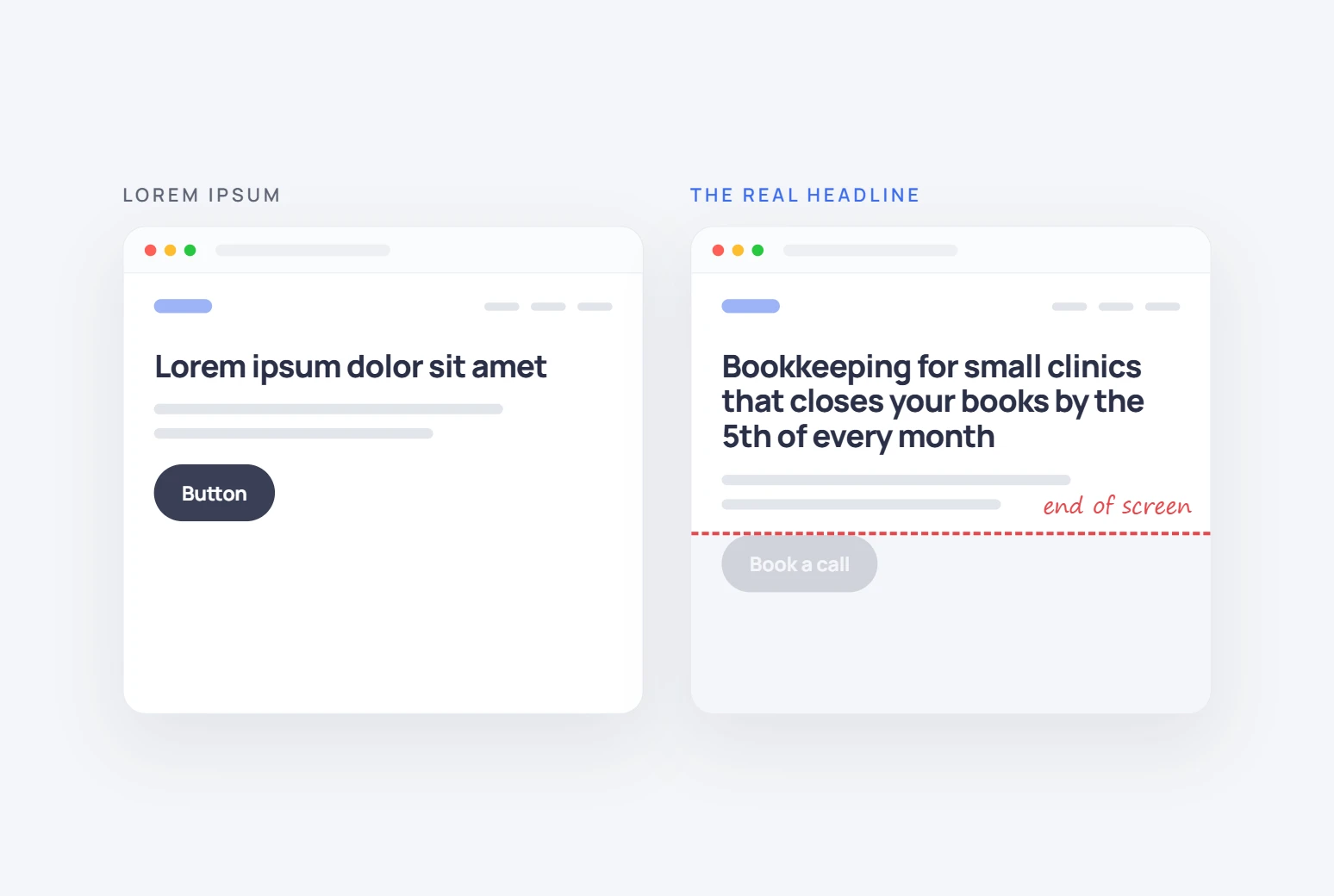
The other extreme is worse. The designer draws a hero with a tidy five-word fake headline and two lines of lorem ipsum. Everyone approves it. Then the real headline shows up at fourteen words, wraps to four lines on a phone and pushes the button off the first screen. That section gets designed a second time.
Here's the difference, using a made-up bookkeeping business:
- Before: "Lorem ipsum dolor sit amet" in a box sized for five words.
- After: "Bookkeeping for small clinics. Your books closed by the 5th of every month." It's rough and it may be wrong, but it's the right length and it's about the right thing.
What do you do first when there's no copy?
Short answer: Give each page one job, then list its sections in order. Do it in a plain doc before you open a design tool.
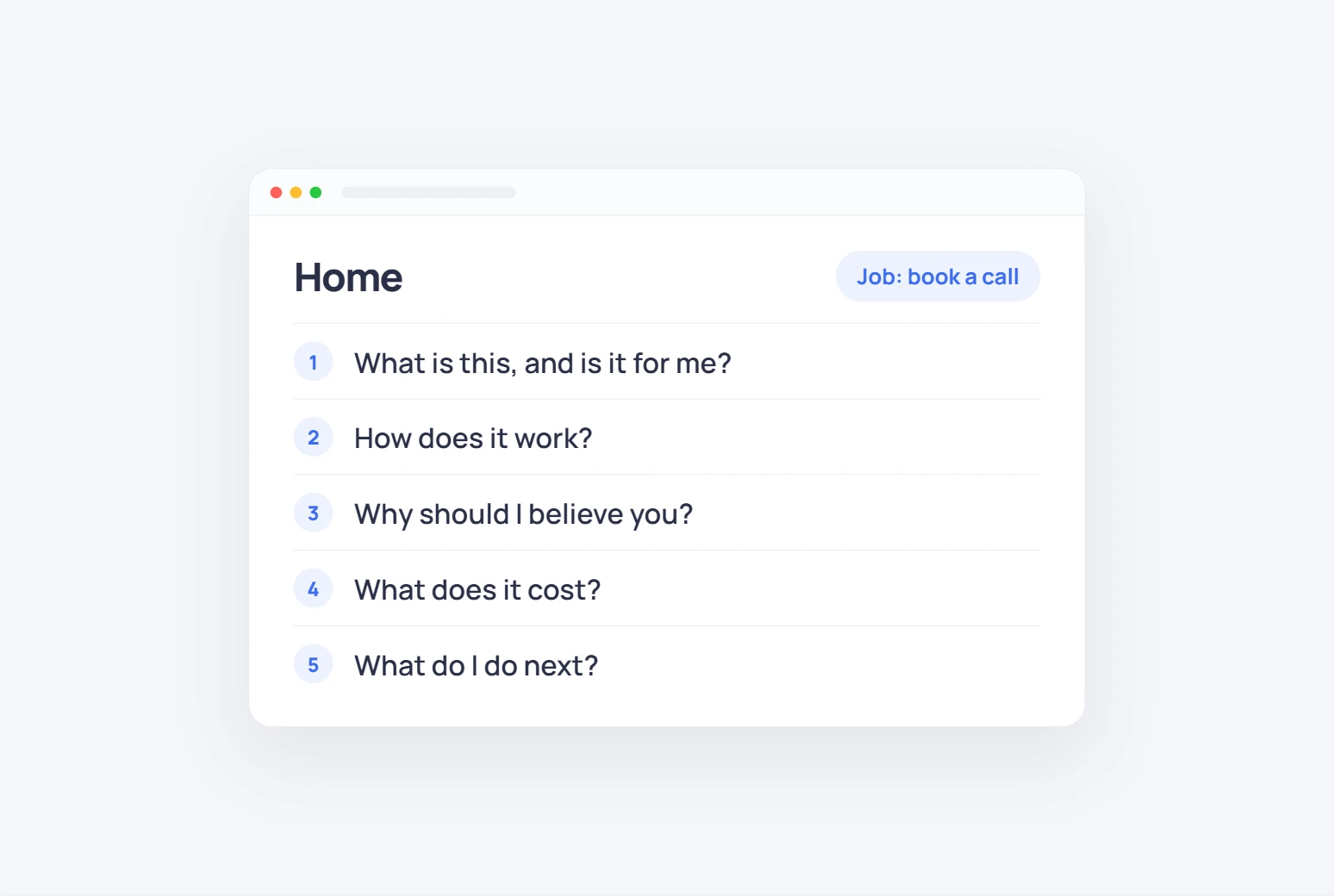
For each page, write one line: what should a visitor do here? Build each page around one action, like booking a call or signing up. "Home: book a call. Pricing: start the free plan." That's enough.
Then outline the page as the questions a visitor asks, in the order they ask them:
- What is this, and is it for me?
- How does it work?
- Why should I believe you?
- What does it cost?
- What do I do next?
No sentence is written yet, but this outline is already content. You know the hero needs a headline and one button. You know section three needs proof, so someone has to go find a real review. A designer can work from that today.
It also tells you what to leave out. If a section doesn't answer one of the visitor's questions, it doesn't need designing. Cutting a section at this stage costs a line in a doc. Cutting it after it's designed costs a day.
What do you put in the design instead of lorem ipsum?
Short answer: Draft copy you write yourself, in plain words, at about the real length.
Some people call it proto-content. It doesn't have to be good writing. Write what each section has to say, the way you'd text it to a friend:
- Headline: "We do the books for small clinics so you don't have to."
- Line under it: "Fixed monthly price. Books closed by the 5th."
- Button: "Book a 15-minute call"
That takes ten minutes. And it does something lorem ipsum can't do: people react to it.
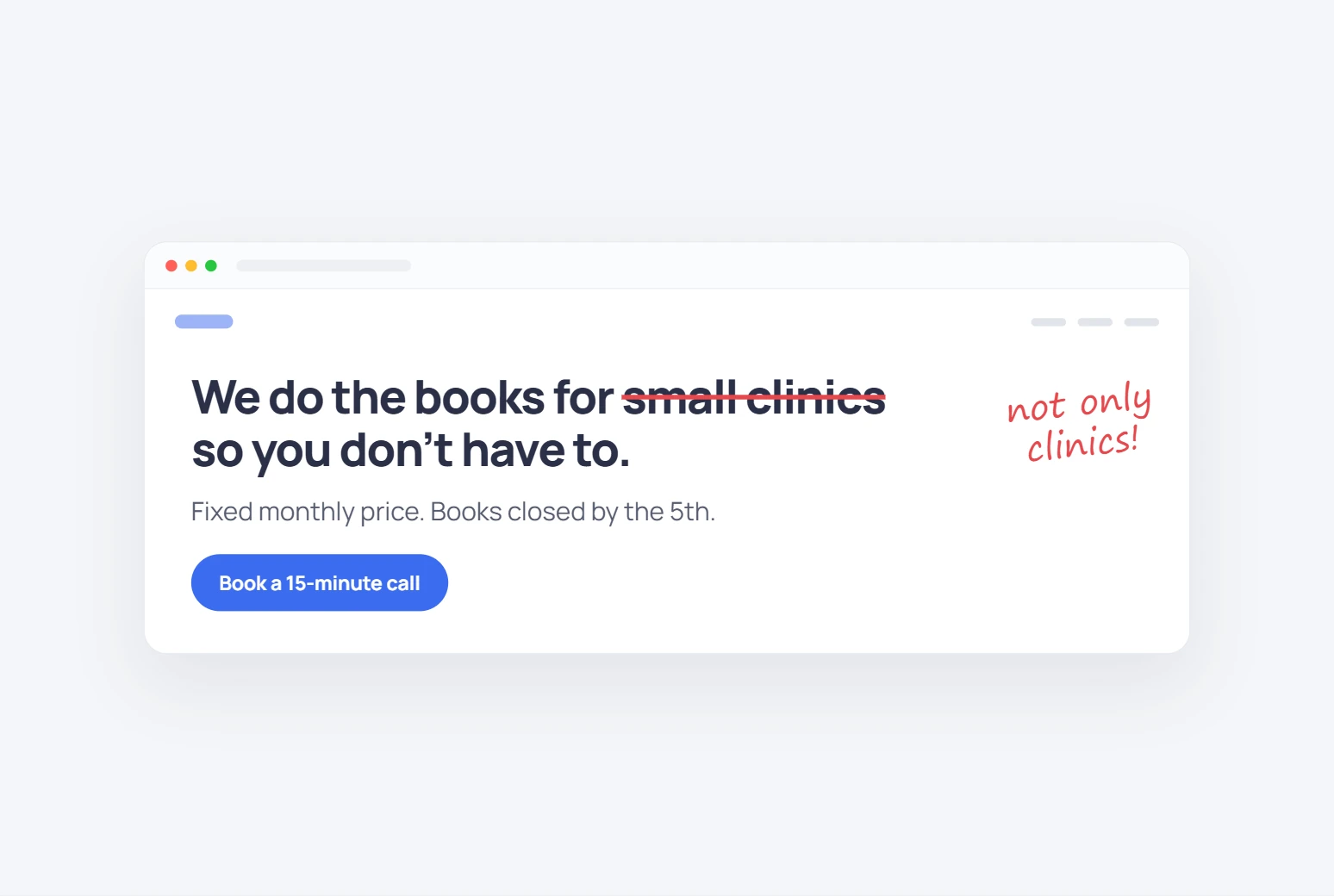
The owner reads the draft and says "we don't only do clinics", or "nobody cares about the 5th, they care about tax season". That's the real copy starting to appear, in the very first review.
Lorem ipsum gets a nod. A wrong draft gets corrected, and the correction is the point.
Where do the draft words come from if you're not a writer?
Short answer: From the owner's mouth, and from words the business has already written somewhere else.
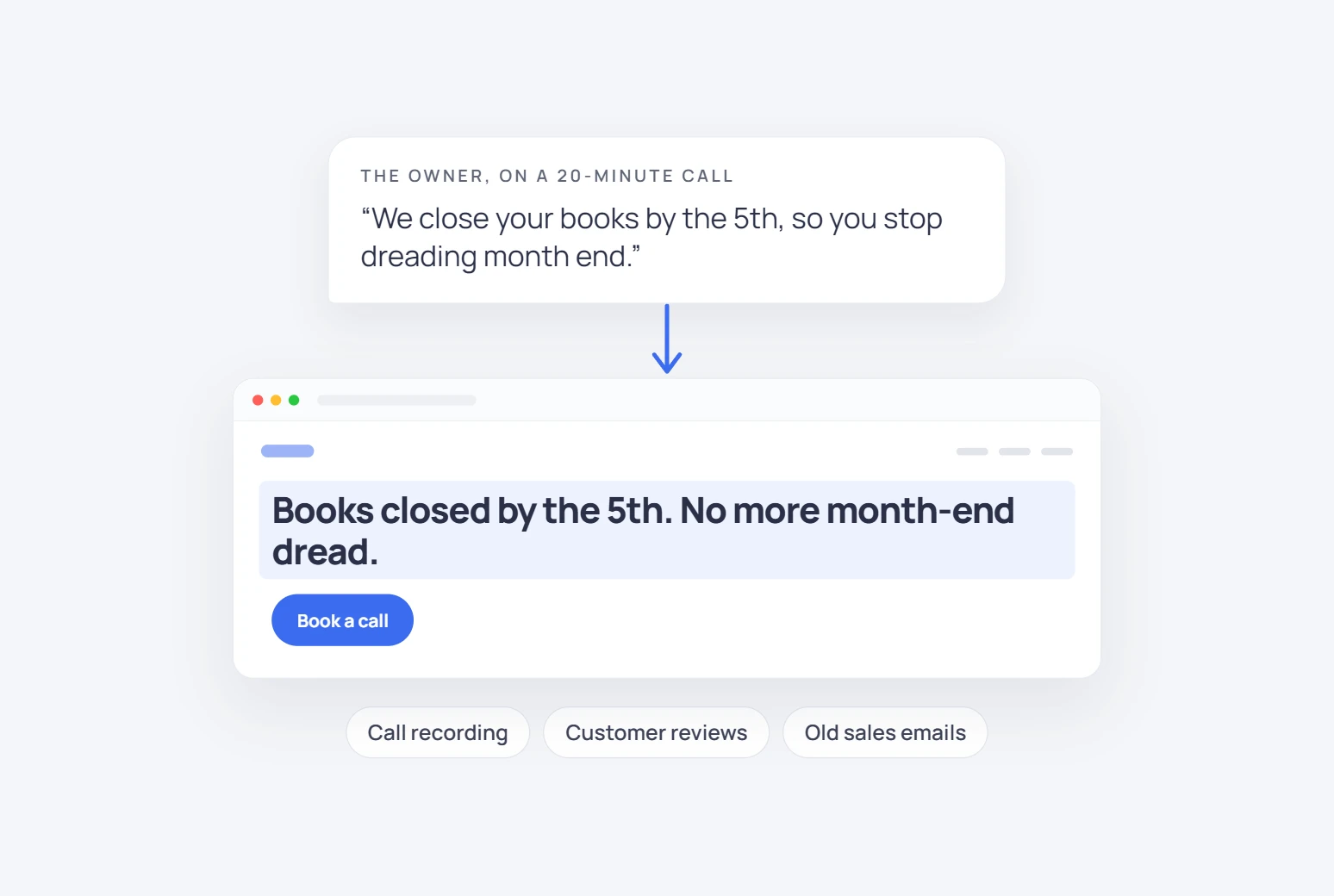
Start with a 20-minute call. Ask if you can record it. Then ask:
- What do you say when someone asks what you do?
- Who is your best customer, and what were they stuck on before they found you?
- What do people ask before they buy?
- Why do people pick you over the other option?
Write the headline from their words. Owners often say it better out loud than they write it. On a call they'll say "we close your books by the 5th so you stop dreading month end". In a doc, the same person writes "comprehensive financial solutions".
Then go looking for words that already exist:
- Customer reviews. The phrases customers repeat are your proof section, and sometimes your headline.
- Sales emails and proposals. The pitch is already written in there.
- Replies to customer questions. That's your FAQ.
- Competitor sites. Look at which sections they have and how long each one runs. Don't copy their sentences.
If you're the owner and there's no designer yet, do this part alone. Record a voice memo answering the four questions, then paste the best sentences into the outline.
How do you stop the layout breaking when the real copy arrives?
Short answer: Design for the longest version from the start.
Real copy tends to run longer than the neat version in your head. So test every text block with a short version and a long one:
- A headline at 5 words and at 14 words.
- A button that says "Start" and one that says "Book a 15-minute call".
- A testimonial of one line and one of five lines.
- A name like "Jo Li" and a name like "Maria Cristina de los Santos".
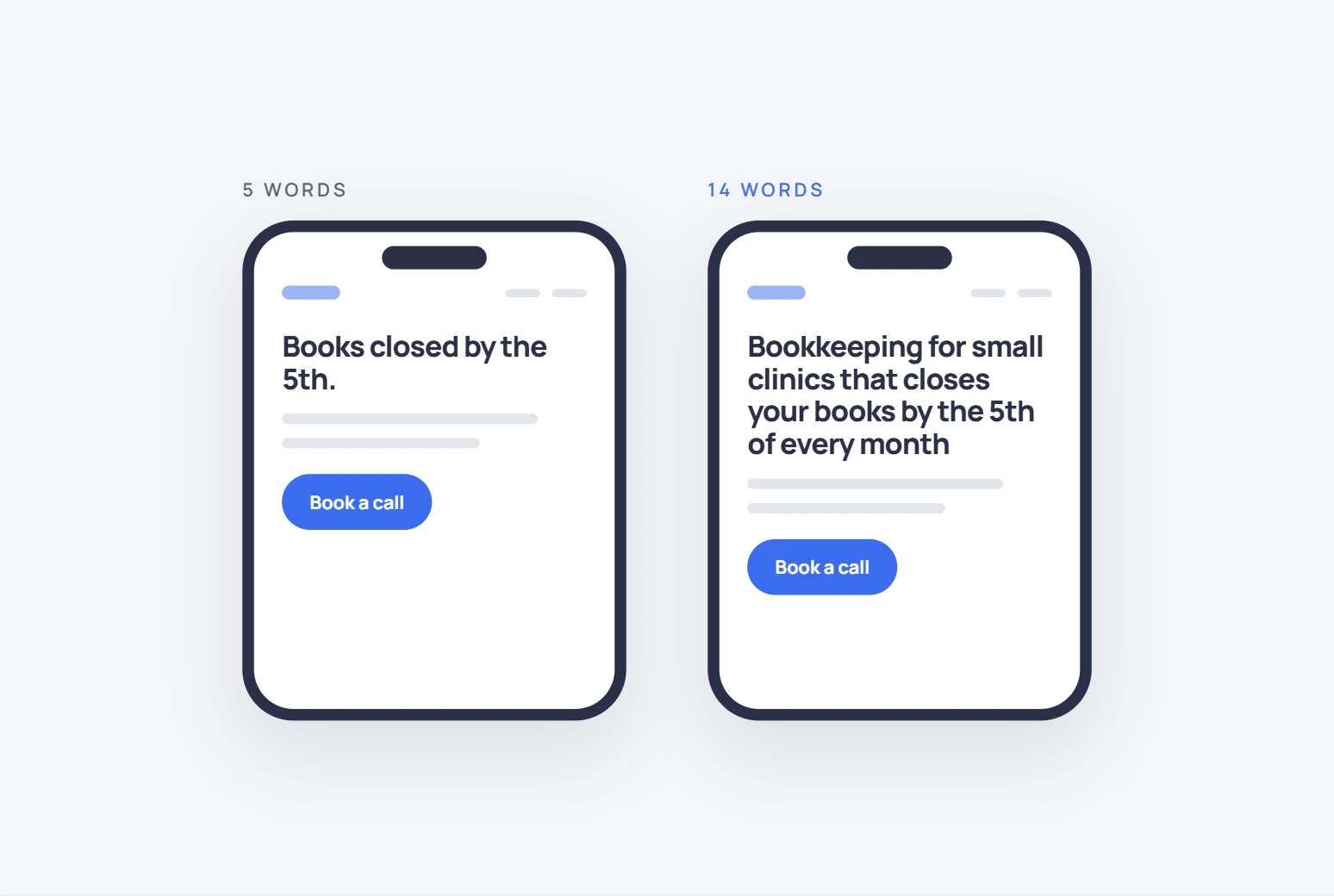
Check all of them at phone width. If the layout survives the long version, a copy change later is a text edit. If it only works with the short version, every copy change is a redesign.
The hero is where this bites hardest. For what that first screen needs once the words exist, see what to put in a landing page hero section.
What can be finished before any copy exists?
Short answer: Everything that stays the same no matter what the words say.
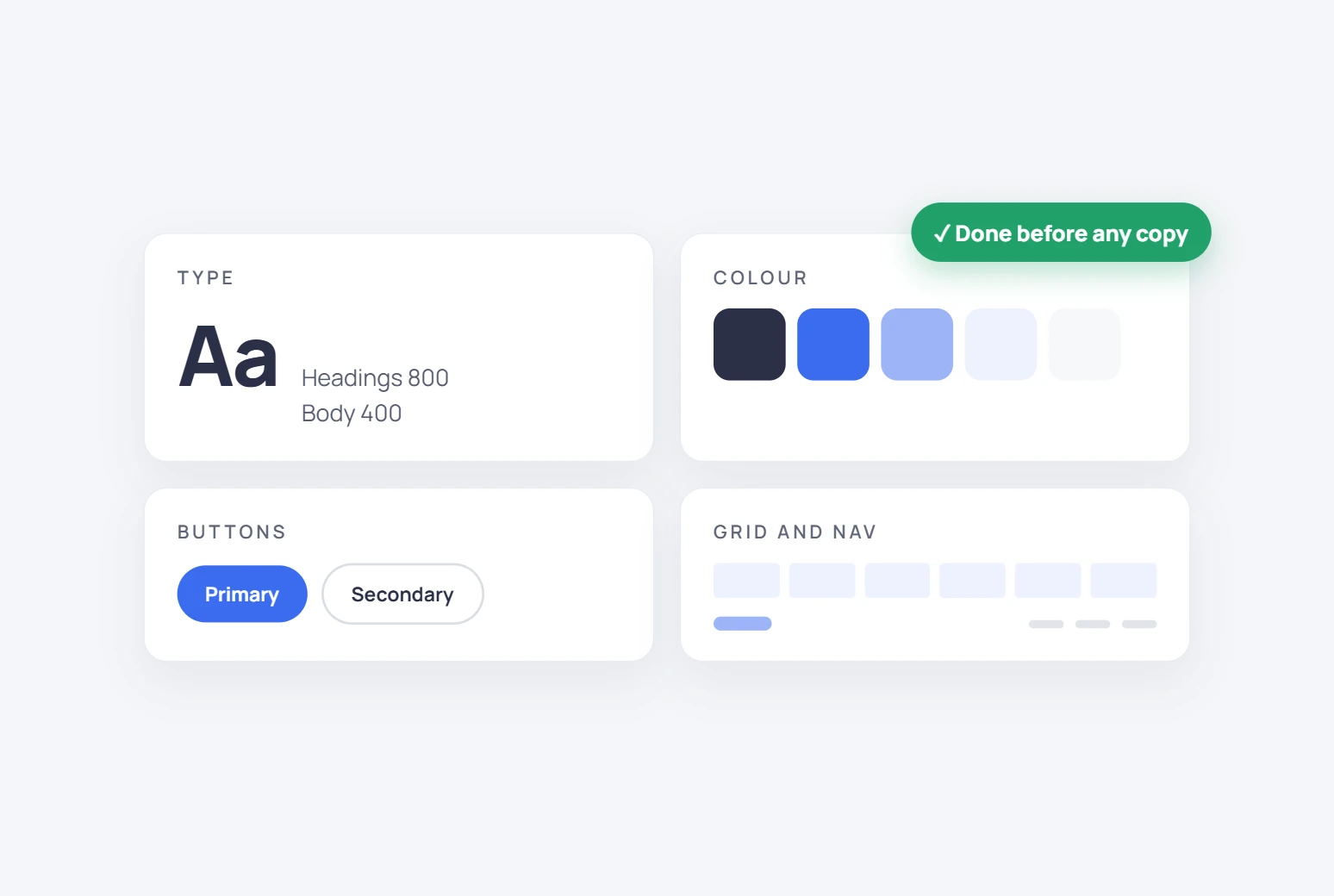
- Type. Fonts, sizes and line height.
- Colour. The palette, and whether text passes contrast on each background.
- Grid and spacing. Column widths and the gaps between sections.
- Components. Buttons, form fields, cards and the footer.
- Navigation. The page list and the menu labels. These are short and you know them early.
None of it needs an approved sentence. Settle these while the owner works on the words, and the two jobs run side by side instead of one after the other.
How do you keep draft copy from going live?
Short answer: Mark every draft line, so nobody mistakes it for final.
Good draft copy has one risk. It looks real. Someone approves the page, and a headline written in ten minutes ends up on the live site.
A few habits stop that:
- Keep one copy doc as the source, with a status on every section: draft, owner checked or final.
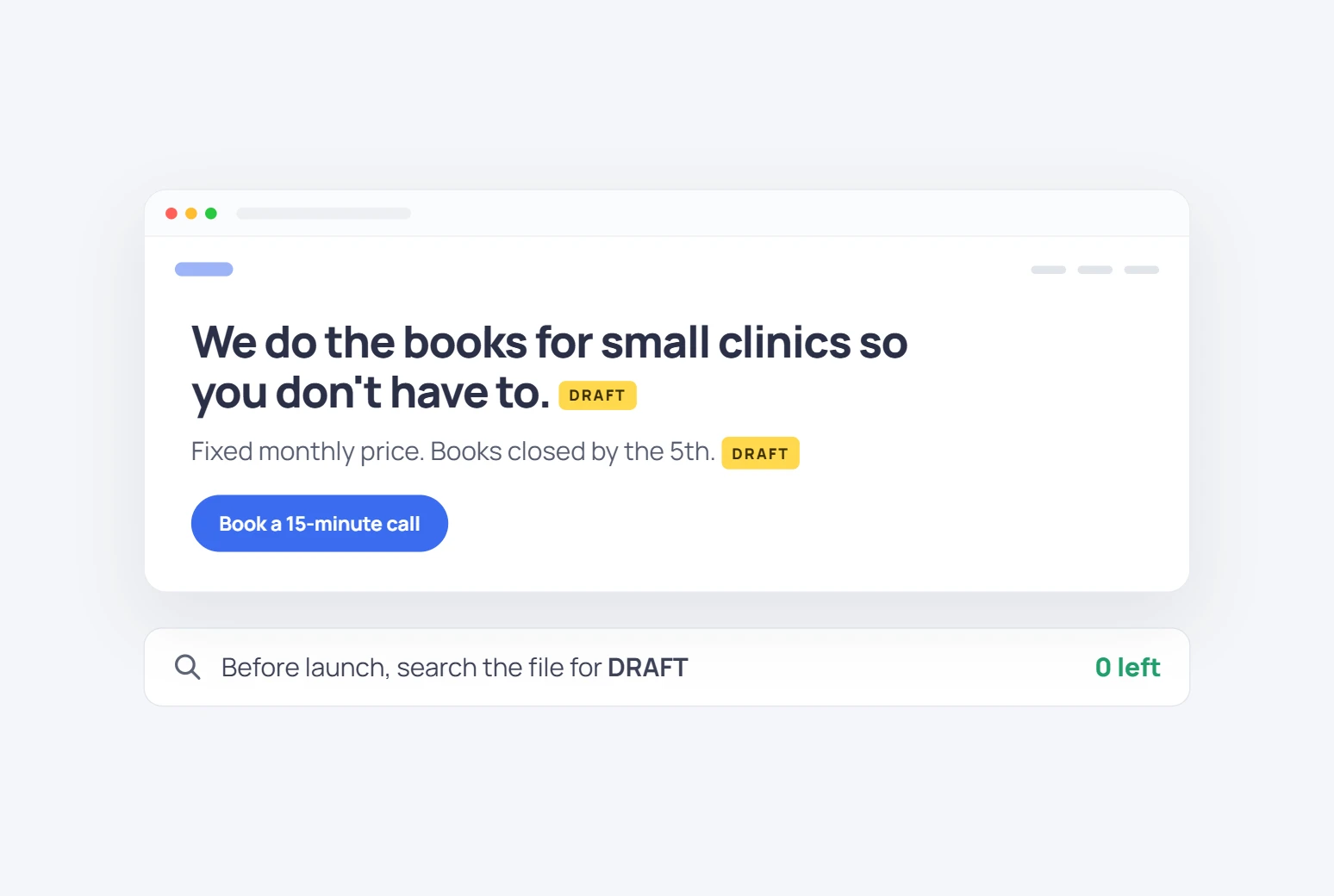
- Tag draft text in the design file. A small "DRAFT" label or a highlight colour works.
- Never make up numbers or customer quotes, even in a mockup. Write "[number here]" or "[real quote from a customer]" instead. A fake testimonial looks real very fast.
- Before launch, search the file for the tag. There should be none left.
Copy not written and the site can't wait? Book a call. Bring whatever you have, even if it's only notes. I reply within a day.
Questions
-
Rough content first, then design, then final copy. They take turns. Waiting for finished copy stalls the project, and designing with no words at all means designing twice.
-
For testing a font or one component on its own, sure. I wouldn't use it on any page that someone is going to review or approve.
-
Whoever knows the customer best. That's usually the owner, with a writer or the designer tidying it up.
Read next
View all posts
Best text for a call to action button (not Submit)
The best text for a call to action button names what happens after the click. See rewrites of Submit, Click here and Learn more.
Aedan Evangelista

Consistent icon style in UI: why mixed sets look cheap
Mixed icon sets make a UI look stitched together. How to spot it, why emoji fail as icons, and how to pick one family and weight.
Aedan Evangelista

How many pricing tiers should a SaaS have? Fewer
How many pricing tiers should a SaaS have? Fewer than you think. When two plans are enough, when three make sense, and when to add one.
Aedan Evangelista
Have a project in mind?
Book a short call. We'll talk through what you're building, and I'll tell you how I can help.
- Length
- 15 minutes
- Where
- Cal Video
- Time zone
- Metro Manila